
How to Choose the Right Laminate Finish for Every Room in Your Home?
Ask five interior designers which laminate finish is “the best,” and you’ll likely get five different answers. That’s not indecision. It’s because the right finish depends on how a room actually gets used, not just how it looks under showroom lighting.
Laminates have become the default surface for kitchen cabinets, wardrobes, and furniture across Indian homes, and for good reason. They’re durable, more affordable than solid wood or stone, and available in far more designs than most people realize. But walk into any laminate showroom with a hundred wall-mounted samples, and the choice can get overwhelming fast.
Choosing the right laminate finish improves both the appearance and durability of your home interiors. Different rooms have different requirements based on moisture, traffic, lighting, and maintenance. Selecting the appropriate finish ensures long-lasting beauty and functionality.
Best Laminate Finishes by Room
- Living Room: Matte or textured laminates create a warm, elegant look while hiding fingerprints and scratches.
- Kitchen: Choose matte or anti-fingerprint laminates that are easy to clean and resistant to stains.
- Bedroom: Satin or matte finishes provide a soft, relaxing appearance for wardrobes and furniture.
- Bathroom: Use moisture-resistant laminates with matte or textured finishes to improve safety and durability.
- Home Office: Matte laminates reduce glare and create a professional workspace.
- Children’s Room: Scratch-resistant and easy-to-clean laminates are ideal for everyday use.
Popular Laminate Finish Types
- Matte Finish: Elegant, low-maintenance, and resistant to fingerprints.
- Glossy Finish: Reflects light and makes spaces appear brighter and larger.
- Textured Finish: Mimics natural wood or stone while offering better grip and a premium feel.
- Satin Finish: A balanced option with a smooth appearance and subtle shine.
Tips for Choosing the Right Laminate
- Match the finish with the room’s purpose.
- Consider moisture, sunlight, and daily usage.
- Select durable laminates for high-traffic areas.
- Coordinate laminate colors with your interior theme.
- Choose trusted laminate brands for long-lasting performance.
This piece breaks down what actually matters when picking a finish, room by room, so the decision is based on function first and looks second.
Why the Finish Matters More Than the Design?
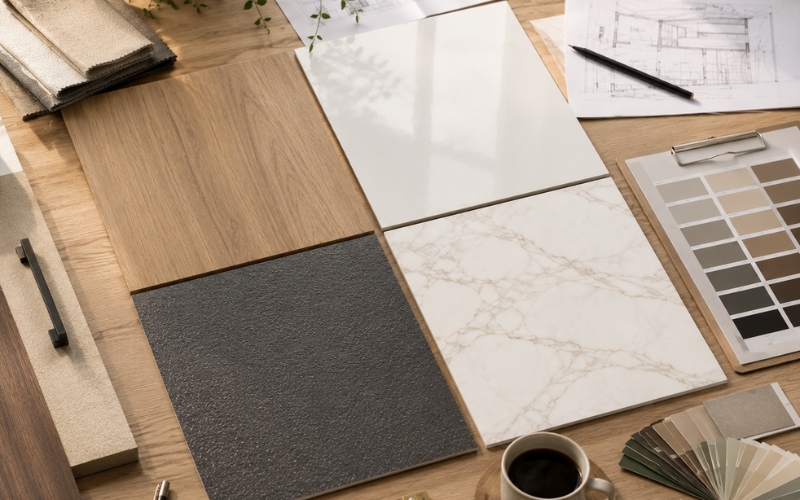
Most people shop for laminates by design first: a wood grain they like, a marble pattern that matches their tiles, a solid colour that goes with the wall paint. That’s a fine place to start. But the finish, high gloss, matte, textured, or suede, decides how that design actually performs day to day.
A high-gloss finish reflects light well and can make a small room feel bigger. It also shows fingerprints, water spots, and scratches far more readily than a matte surface does. A matt laminate hides daily wear better but can look flat under poor lighting. Textured finishes, fluted, leather-look, or fabric-effect, add depth and hide minor scuffs, though grooves can be harder to wipe clean if oil or food gets into them.
None of these are wrong choices. They’re trade-offs. Once you know what you’re trading, the decision gets a lot easier.
Four Questions to Ask Before You Pick a Finish
- How much daylight does the room get?
Gloss finishes need light to look their best. In a dim passage or a north-facing bedroom, a glossy surface can look dull rather than dramatic. Matte and textured finishes hold up better in low-light spaces.
- Who uses this space, and how often?
A kitchen used by a large family sees more oil, moisture, and daily handling than a guest bedroom wardrobe. High-traffic zones generally do better with scratch-resistant, matte, or textured laminates that don’t show every mark.
- How much maintenance are you willing to do?
Gloss looks striking right after cleaning and less so a week later if nobody’s wiping it down. If you want a surface that looks consistently good with minimal upkeep, matte or textured options are more forgiving.
- Is moisture a factor?
Bathrooms, kitchen backsplash zones, and utility areas need laminates rated for water and humidity resistance, not just a finish that looks good on paper.
Picking Finishes Room by Room
» Kitchen Cabinets and Shutters
This is the hardest-working laminate in the house. Choose a scratch-resistant, moisture-resistant grade first, and treat the finish as a secondary decision. Matte and textured wood grains are popular because they hide handling marks near handles and hobs. If gloss is what you want for the visual impact, keep it to upper cabinets or an island, away from the sink and stove.
» Wardrobes
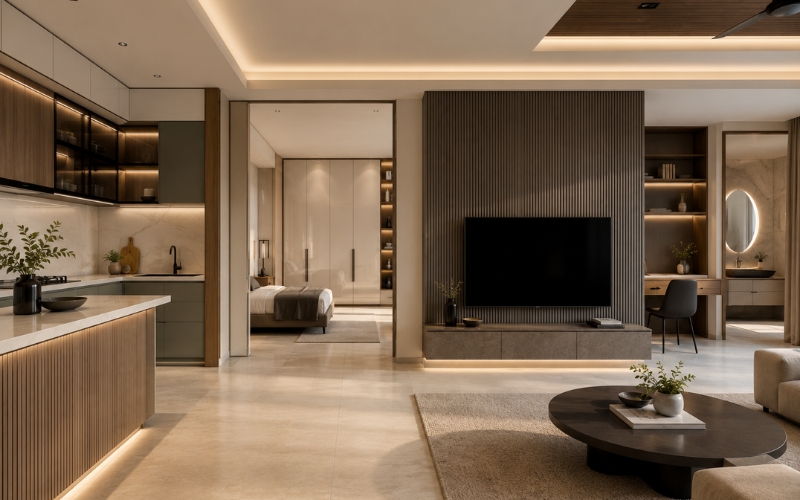
Wardrobes get opened and closed dozens of times a day but rarely get as dirty as kitchens do. This is where gloss and solid colours genuinely work well; they photograph nicely and make a bedroom feel more finished. Dual-tone combinations, a lighter shade paired with a darker accent panel, are a popular way to add interest without overwhelming a small room.
» Living Room Units and Wall Panels:
TV units and feature walls are about visual statement more than daily wear, so marble-look, stone-textured, or fluted wooden panels tend to work well here. A textured or fluted finish also adds architectural interest to an otherwise flat wall, something plain paint can’t easily replicate.
» Bathroom and Utility Surfaces:
Skip decorative gloss here. Look specifically for laminates designed for high-moisture zones, and confirm the water resistance rating before anything else. A textured or matte finish also tends to hide water spots better than a mirror-like gloss surface does.
» Study and Home Office Furniture:
Matte finishes work well since they cut glare on desks used with laptops or under table lamps. A slightly textured surface can also help hide the daily scuffs from books, chargers, and stationery.
» Entryways and Hallway Units:
Shoe cabinets and console units near the front door take a beating from dust, footwear, and constant contact. A textured or matte finish handles this better than gloss, which tends to show scuff marks and dust almost immediately in a space that gets brushed past dozens of times a day.
A Quick Word on Durability Standards
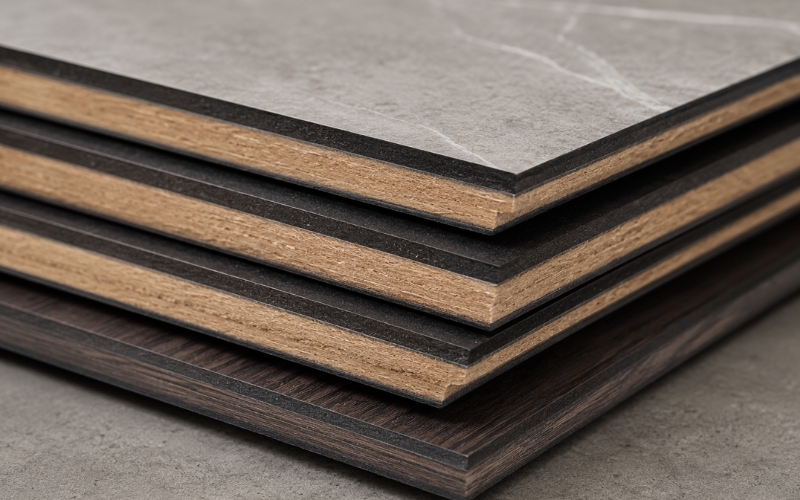
Not all laminates are built the same way. Two sheets can look identical on a showroom wall and still perform very differently. In India, high pressure laminates are generally expected to meet IS 2046. This is the Bureau of Indian Standards specification for thickness tolerance, scratch and abrasion resistance, and resistance to heat and moisture. When comparing brands, ask whether their laminates are tested to this standard. A compliant sheet is far less likely to warp, discolour, or crack within a few years of daily use.
The manufacturing process matters just as much. Laminates made with a higher phenolic resin content in the core tend to hold up better under repeated impact and heat than cheaper, paper-only alternatives. Ogaan Laminates, for instance, makes its 1mm and 0.8mm ranges with 100% phenolic resin cores. That’s part of why the sheets carry a 15-year warranty, longer than the terms common with lower-grade laminates. It’s a good example of how the core material, not just the surface pattern, decides how long a laminate actually lasts.
Common Mistakes Homeowners Make
» Choosing Gloss for the Whole House
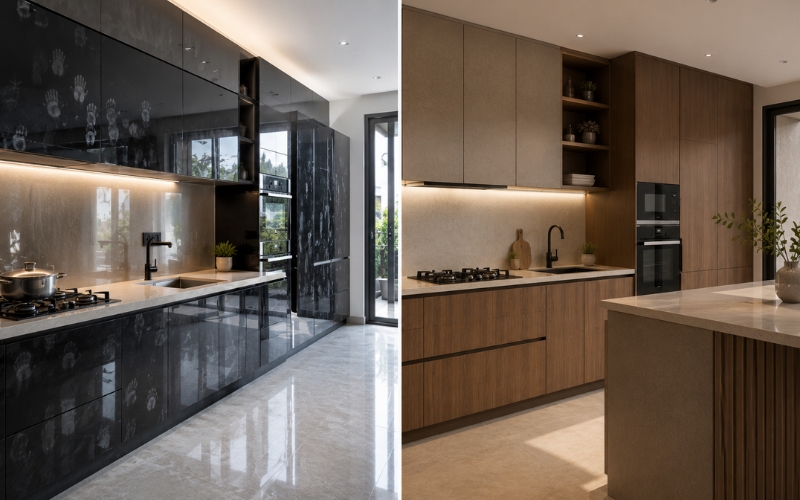
Gloss looks impressive in photos, which is why so many homes end up with it everywhere. In person, all-gloss interiors can feel visually noisy and need constant upkeep. Mixing finishes room to room usually looks more considered anyway.
» Ignoring the Inside of the Shutter
The interior faces of wardrobes and cabinets, the parts you actually touch, load, and unload things against, benefit from a liner laminate rather than the same decorative finish used outside. It’s a small detail that affects how smoothly drawers and shelves function over time.
» Skipping the Warranty Conversation
A laminate that looks identical to a cheaper one on day one can behave very differently by year three. Always ask what the warranty actually covers. Cracking, discolouration, and peeling are the common failure points, not just visible surface damage.
» Assuming All Laminates Handle Moisture the Same Way
Some ranges are built specifically for wet zones, and using a standard decorative laminate in a bathroom or utility area is one of the more common and expensive mistakes in Indian renovations.
Getting Samples Right
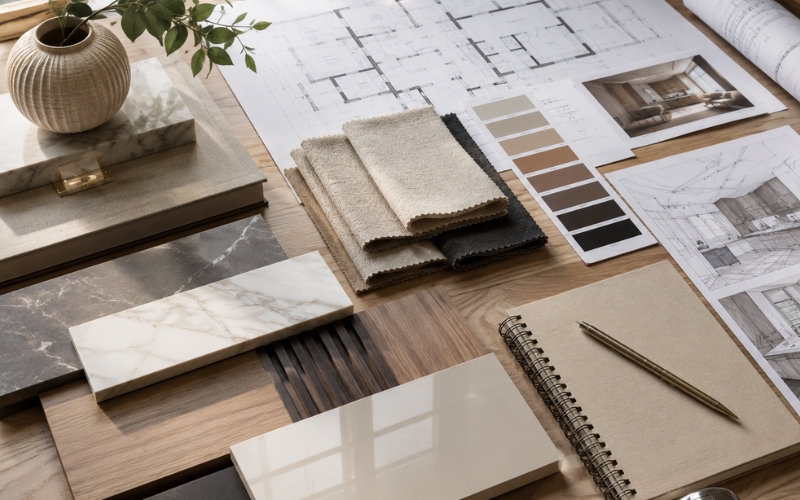
Never finalize a finish from a small swatch under showroom lighting. Ask for a full-size or at least an A4-sized sample and take it home. Hold it against the actual wall colour. Check it in the actual lighting, at the time of day you’ll see it most: evening for living rooms, morning for kitchens. A finish that looks perfect under warm showroom lights can look completely different under a kitchen’s cool white tube light.
If a contractor or carpenter is doing the installation, ask a simple question: which finishes have they had callbacks on for this kind of use? Chipped edges, peeling, and fading are the usual complaints. Tradespeople who install laminates every day usually know more about real-world performance than any catalogue description does.
The Bottom Line
Choosing a laminate finish isn’t really about picking the prettiest sample on the wall. It’s about matching light, traffic, moisture, and maintenance habits to a surface that can handle them. Get those basics right first, and the design part, the colour, the grain, the texture, becomes the easy decision it should have been all along.
Frequently Asked Questions
- Which laminate finish is easiest to maintain?
Matte and textured finishes generally show fewer fingerprints and water marks than high gloss, making them easier to keep looking clean between wipes.
- Is high gloss laminate a bad choice for kitchens?
Not necessarily, but it needs more frequent cleaning. Many homeowners use gloss on upper cabinets, away from cooking splatter, and a more practical matte or textured finish near the stove and sink.
- Do textured laminates cost more than plain gloss or matte?
Pricing varies by brand and design complexity rather than finish type alone. It’s worth comparing a few ranges rather than assuming texture always costs more.
- How long should a good laminate last?
With proper installation and normal use, a well-made high pressure laminate can comfortably last well beyond a decade. Warranty length is often a reasonable indicator of how confident a manufacturer is in its own product.
- Can I mix finishes in the same room?
Yes, and it’s actually a common design approach. Pairing a glossy accent panel with matte cabinetry, for example, adds contrast without making the whole room feel busy.
- How do I clean laminate surfaces without damaging the finish?
A soft cloth with a mild soap solution is usually enough. Skip abrasive scrubbers and harsh chemical cleaners, especially on matte and textured finishes, since they can dull the surface or wear into the grain over time.
- Is laminate a better choice than painted MDF for cabinets?
Laminate generally holds up better against scratches, moisture, and daily handling than paint does. Painted MDF can look striking at first but often needs touch-ups sooner than a good laminate finish will.
- Can laminate be applied over existing cabinets, or do they need replacing?
In most cases, old shutters can be relaminated rather than replaced, as long as the base material underneath is still structurally sound. This usually costs less than a full cabinet replacement.
- Is every laminate water-resistant, or only certain ranges?
Only specific grades are built and tested for high-moisture use. A standard decorative laminate isn’t automatically suitable for bathrooms or utility areas, so check the water-resistance rating before choosing one for a wet zone.
- How does laminate compare to veneer when it comes to upkeep?
Veneer is a thin layer of real wood, so it needs more careful handling and occasional refinishing to stay protected. Laminate’s synthetic surface generally needs less maintenance and holds up better against daily wear.